
Mercer County Family Court Custody Cases handle disputes involving child custody, child support, and divorce-related matters. These cases move through the domestic relations division where judges review facts, documents, and statements from both parties. Custody disputes often focus on parenting time, legal decision-making rights, and living arrangements for children. The court issues formal orders that set clear responsibilities for each parent. Child support cases are reviewed based on income, expenses, and the child’s needs. Divorce matters are often connected with custody and financial support rulings in the same case file. Each decision aims to create structure for stable family arrangements after separation.
The Mercer County family court system manages a wide range of domestic relations cases under one legal framework. Custody hearings may involve temporary orders at first, followed by final rulings after full review. Judges consider evidence related to parenting history, home environment, and cooperation between parents. Custody disputes can include joint custody, sole custody, and specific visitation schedules. Court orders remain legally binding and must be followed unless modified through formal requests. Child support decisions are reviewed periodically to reflect changes in income or family needs. Divorce proceedings often run alongside custody cases, connecting financial and parenting decisions within the same court process.
How to Search Mercer County Family Cases?
Mercer County custody cases can be searched through official Mercer County court records and public databases. The custody case lookup Mercer County process helps locate hearing details, filings, and court activity tied to family law matters. Users often rely on a case number search or docket search tool to find exact records. These systems organize custody, divorce, and support information in one place. Most records come from domestic relations filings maintained by the court. Public records may show basic case status and scheduled hearings. Accurate details depend on the information entered during the search.
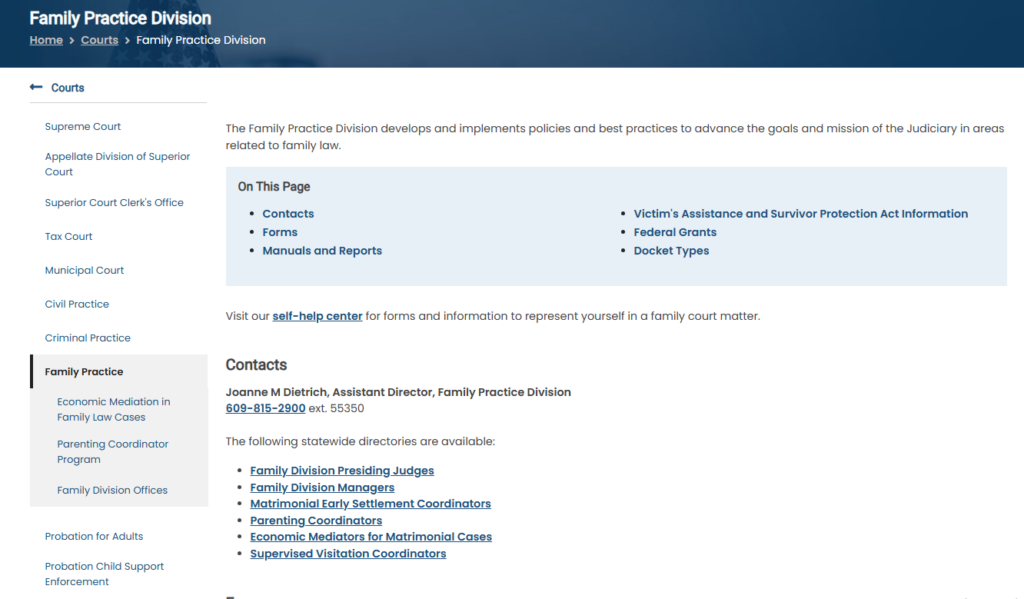
Step Search Process
Searching Mercer County custody records follows a structured process that uses official tools and identifiers.
Here it is:
- Visit the Mercer County court records or public records portal. Official Sitehttps://www.njcourts.gov/courts/family:
- Select the family court or domestic relations section.
- Enter a case number search if available for precise results.
- Use party names if the case number is not known.
- Review the docket search tool results for hearings and filings.
- Open the case entry to view custody, support, or divorce details.
Each step helps narrow down results from a large set of court filings. Case numbers produce the most direct match. Name-based searches may show multiple entries for related matters.
Information Available in Custody Case Records
Mercer County court records typically show case status, hearing dates, and filed motions. Custody case lookup Mercer County results may include parenting schedules and temporary orders. Some records list child support decisions and modification requests. Docket entries show past and upcoming court activity in sequence. Public records may also display attorney information and court-issued rulings. Sensitive details remain restricted depending on case type and legal rules.
What Are Mercer County Family Court Cases?
Mercer County family court custody cases are legal matters that decide where a child lives and who makes key decisions for the child. These cases move through the domestic relations court Mercer County system, which handles family law matters such as custody, divorce, and support. Judges review evidence from both parents before issuing custody decisions and parenting plans. These cases often begin after separation or divorce when parents cannot agree on child arrangements. Custody disputes focus on the child’s living situation, schooling, healthcare decisions, and daily care. Court orders set clear rules for each parent’s responsibilities. Each case aims to create a stable structure for the child’s care and support.
Types of Custody Disputes in Mercer County
Custody disputes in Mercer County family court custody cases usually fall into several categories based on parental rights and living arrangements.
Here it is:
- Legal custody vs physical custody
Legal custody covers decision-making rights for education, healthcare, and welfare. Physical custody focuses on where the child lives and daily care. - Joint custody arrangements
Both parents share responsibilities and participate in major decisions affecting the child’s life. - Sole custody cases
One parent holds primary decision-making authority, and the other may receive visitation rights. - Parenting plan conflicts
Disputes often arise over schedules, holidays, and school-related routines outlined in parenting plans.
These custody dispute types help the court determine the most suitable arrangement for the child’s well-being and stability.
Role of the Family Court Judge
The family court judge plays a central role in Mercer County custody cases by reviewing facts and issuing final orders. Judges examine financial records, home environments, and parenting history before making decisions. They also consider custody disputes raised by each parent during hearings. In domestic relations court Mercer County, judges evaluate whether joint or sole custody serves the child’s best interests. They issue parenting plans that define visitation schedules and decision-making authority. Court orders issued by the judge are legally binding and must be followed by both parents. If circumstances change, the judge may modify custody arrangements after a formal request is filed.
Types of Child Custody in Mercer County
Mercer County child custody cases involve several custody types that define how parents share responsibilities after separation or divorce. These arrangements are shaped through custody agreements or court orders issued by the domestic relations court Mercer County system. Judges decide custody based on facts presented in hearings, focusing on the child’s safety, stability, and daily needs. Custody decisions also include visitation rights for the non-custodial parent. Each arrangement is designed to define parenting time, decision-making authority, and living arrangements. Courts aim to reduce conflict between parents by setting clear legal terms. The final custody structure depends on what serves the child’s long-term well-being.
Main Types of Custody in Mercer County
Mercer County child custody cases usually involve four main custody types that define parental roles and responsibilities:
- Joint custody
Both parents share responsibility for major decisions and often divide parenting time. This arrangement encourages active involvement from both sides. - Sole custody
One parent holds primary legal and physical responsibility for the child. The other parent may receive visitation rights depending on the court order. - Legal custody
Covers decision-making authority for education, healthcare, and general welfare of the child. - Physical custody
Determines where the child lives and who provides daily care and supervision.
Custody agreements often combine these types, such as joint legal custody with primary physical custody assigned to one parent. Courts structure these arrangements based on each family’s situation.
How Judges Decide Custody Cases
Judges in Mercer County custody cases follow the best interest of the child standard when making decisions. This standard focuses on what arrangement supports the child’s safety, emotional stability, and development. Courts review parenting history, home conditions, and each parent’s ability to care for the child. They also consider school performance, medical needs, and emotional bonds with each parent. If a custody agreement exists, judges review it before approval or modification. Visitation rights are set to maintain a consistent relationship with both parents when possible. Custody decisions may include detailed parenting schedules, holidays, and communication rules. Each ruling is based on evidence presented during court hearings rather than assumptions or personal preference.
Mercer County Family Court Case Process
Custody matters in Mercer County Family Court follow a structured legal path that starts with filing a custody petition and ends with a judge’s ruling. Each stage builds a record that shapes the final case outcome. The custody case process in Mercer County usually includes filing documents, mediation efforts, and a scheduled custody hearing Mercer County before a judge makes a final decision. The full case timeline depends on filings, responses, and court availability.
Filing Custody Petition in Mercer County
The first stage starts with filing custody Mercer County through the Family Court. A parent or legal guardian submits a custody petition that explains the request for custody or visitation rights. Once filed, the court opens a case record and assigns a docket number. This number tracks all activity tied to the custody case timeline.
Key points in this stage include:
- Completing the custody petition form
- Stating reasons for custody request
- Submitting forms at Mercer County Family Court clerk office
- Paying required filing fees or requesting fee waiver
Serving Documents and Mediation Attempt
After filing, the next step involves serving documents to the other parent or party. This step notifies them officially about the custody case.
Service process typically includes:
- Delivery through approved process server or sheriff
- Proof of service filed with the court
- Response period for the other party
Once service is completed, many Mercer County cases move toward mediation. Mediation gives both parents a chance to discuss custody terms outside the courtroom. A neutral mediator helps both sides try to reach a parenting agreement.
Court Hearing and Judge Ruling in Custody Hearing
If no agreement is reached, the court schedules a custody hearing Mercer County. Both parties present evidence, witness statements, and supporting documents. The court focuses on the child’s best interest when reviewing facts. Factors may include living conditions, parental involvement, and stability.
During the hearing:
- Each parent presents their position
- Evidence related to child welfare is reviewed
- The judge may ask questions directly
After reviewing all details, the judge issues a ruling. This decision becomes a formal custody order that outlines:
- Custody arrangement (joint or sole)
- Parenting time schedule
- Decision-making authority
Case Timeline in Mercer County Custody Matters
The case timeline varies based on case complexity and court schedules. Simple cases may resolve faster if mediation succeeds early. Contested cases with disputes or missing documents may take longer.
Typical stages follow this order:
- Filing custody petition
- Serving documents
- Mediation attempt
- Court hearing
- Judge ruling
Each step builds the legal record that shapes the final custody outcome in Mercer County Family Court.
Custody Hearings in Mercer County Family Court
A custody hearing in Mercer County Family Court is where a judge reviews facts, listens to both parents, and decides what arrangement serves the child best. A family judge Mercer County focuses on the child’s safety, stability, and daily needs before making any custody order. These hearings play a key role in shaping custody arrangements and parenting time schedules. They give both parents a fair chance to present their case and address concerns about the child’s care.
What Happens During a Custody Hearing
A custody hearing follows a clear process that helps the court review each parent’s position. At the start, both sides present opening statements. Each parent or their attorney explains their preferred custody plan and key concerns. Next, the court hears testimony from parents and sometimes other witnesses. This may include teachers, relatives, or childcare providers. The judge listens closely to each statement and may ask direct questions. The judge reviews all materials to build a clear picture of the child’s life. Short breaks may occur if needed, and then closing arguments follow. At the end, the judge may give a decision or schedule another hearing.
During the hearing, both sides submit evidence such as:
- School records and report cards
- Medical records and health updates
- Text messages, emails, or call logs
- Work schedules and daily routines
What a Family Judge Evaluates
A family judge Mercer County looks at several factors before making a custody decision. The goal is to support the child’s well-being and long-term stability. The judge may also assess a proposed parenting plan evaluation. This plan outlines custody schedules, holidays, and decision-making roles. Clear and realistic plans often carry more weight.
Key points the judge reviews include:
- Parent-child relationship and emotional bond
- Each parent’s ability to provide care and supervision
- Stability of the home environment
- History of conflict, neglect, or abuse
- Willingness to support the child’s relationship with the other parent
Role of Evidence and Witnesses
Strong evidence plays a major role in custody hearings. It supports claims and helps the judge verify facts. Organized and relevant documents often improve credibility. Witnesses can strengthen a case by sharing direct observations. For example, a teacher may speak about the child’s behavior or attendance. A relative may explain daily care routines or parenting involvement. The judge weighs each piece of testimony carefully. Consistency between statements and evidence builds trust. Clear facts often influence the final custody order and future parenting arrangements.
Custody Hearings in Mercer County Family Court
A custody hearing in Mercer County Family Court is where a judge reviews facts, listens to both parents, and decides what arrangement serves the child best. A family judge Mercer County focuses on the child’s safety, stability, and daily needs before making any custody order. These hearings play a key role in shaping custody arrangements and parenting time schedules. They give both parents a fair chance to present their case and address concerns about the child’s care.
What Happens During a Custody Hearing
A custody hearing follows a clear process that helps the court review each parent’s position. At the start, both sides present opening statements. Each parent or their attorney explains their preferred custody plan and key concerns. Next, the court hears testimony from parents and sometimes other witnesses. This may include teachers, relatives, or childcare providers. The judge listens closely to each statement and may ask direct questions. The judge reviews all materials to build a clear picture of the child’s life. Short breaks may occur if needed, and then closing arguments follow. At the end, the judge may give a decision or schedule another hearing.
During the hearing, both sides submit evidence such as:
- School records and report cards
- Medical records and health updates
- Text messages, emails, or call logs
- Work schedules and daily routines
What a Family Judge Evaluates
A family judge Mercer County looks at several factors before making a custody decision. The goal is to support the child’s well-being and long-term stability. The judge may also assess a proposed parenting plan evaluation. This plan outlines custody schedules, holidays, and decision-making roles. Clear and realistic plans often carry more weight.
Key points the judge reviews include:
- Parent-child relationship and emotional bond
- Each parent’s ability to provide care and supervision
- Stability of the home environment
- History of conflict, neglect, or abuse
- Willingness to support the child’s relationship with the other parent
Role of Evidence and Witnesses
Strong evidence plays a major role in custody hearings. It supports claims and helps the judge verify facts. Organized and relevant documents often improve credibility. Witnesses can strengthen a case by sharing direct observations. For example, a teacher may speak about the child’s behavior or attendance. A relative may explain daily care routines or parenting involvement. The judge weighs each piece of testimony carefully. Consistency between statements and evidence builds trust. Clear facts often influence the final custody order and future parenting arrangements.
Mercer County Divorce Court and Custody Connection
In mercer county divorce court, custody decisions are handled within the divorce case and focus on the child’s best interests. Custody and divorce Mercer County matters often combine legal separation issues with parenting concerns, so the court reviews both before issuing final orders. During divorce proceedings, the court examines how the separation will affect the child’s daily life and stability. Judges review each parent’s request for custody early in the case and consider how living arrangements, school routines, and emotional support may change after divorce. The process aims to create a structure that supports the child during a period of transition.
How Custody Is Decided in Divorce Cases
The court reviews parental rights carefully before making custody decisions. Each parent may request legal custody, physical custody, or a shared arrangement. The judge focuses on the child’s relationship with each parent, the history of caregiving, and the ability to provide a safe and stable home. The court pays close attention to how each parent meets the child’s emotional and physical needs. It also considers how well each parent can support a healthy relationship between the child and the other parent. In many cases, the judge reviews a proposed parenting plan that outlines schedules, holidays, and decision-making roles. A clear and practical plan can help move the case forward and support a balanced outcome.
Temporary Custody Orders During Divorce
Many cases in mercer county divorce court involve temporary custody orders. These orders set short-term rules for custody and parenting time while the divorce is still pending. They help maintain stability for the child and reduce conflict between parents. Temporary orders usually decide where the child will live, how parenting time is shared, and how key decisions like school or healthcare will be handled. These arrangements remain in place until the court issues a final custody decision. Judges may revise them if circumstances change or if one parent fails to follow the terms.
Impact of Asset Separation on Custody
The division of property, often referred to as asset separation impact on custody, can influence certain custody outcomes. Financial stability affects each parent’s ability to provide housing, education, and daily care for the child. The court reviews income, housing plans after divorce, and overall financial resources. Even though property division and custody are separate legal issues, financial conditions can shape the final decision. The main focus remains on creating a stable and supportive environment that meets the child’s needs.
Child Support Cases in Mercer County Family Court
A mercer county support case decides how much one parent must pay to help cover a child’s needs. Mercer county child support orders are based on income, expenses, and the child’s standard of living. Child support cases focus on fair financial responsibility for both parents. The court reviews income details, parenting time, and the child’s daily needs before setting an amount. Judges follow state guidelines to keep decisions consistent and balanced.
How Child Support Is Calculated
The court uses a standard child support calculation method to determine payment amounts. This method looks at both parents’ incomes, including wages, bonuses, and other earnings. It also considers expenses such as healthcare, childcare, and education. Parenting time plays a role in the final amount. If one parent spends more time with the child, the payment may adjust to reflect shared costs. The court may review documents like pay stubs, tax returns, and employment records to confirm accuracy. In some cases, the judge may adjust the calculated amount. This can happen if the child has special needs or if a parent has unusual financial circumstances. The goal is to set a fair amount that supports the child’s well-being.
Enforcement Actions for Child Support
If a parent fails to pay ordered support, the court can issue an enforcement order. This action helps make sure payments are made on time and in full. Enforcement protects the child’s right to financial support. Common enforcement steps include wage garnishment, where payments are taken directly from a paycheck. The court may place liens on property or suspend licenses, such as a driver’s license. In serious cases, the court may impose fines or other penalties. Judges review each case before taking enforcement action. The focus remains on securing consistent support rather than punishment.
Modifications to Child Support Orders
Child support orders can change over time through a formal modification process. A parent may request a review if there is a significant change in income, employment, or the child’s needs. The court examines updated financial records and current living conditions. If the change meets legal standards, the judge may increase or decrease the support amount. This keeps the order fair and aligned with current circumstances. A modified order replaces the previous one once approved. This process helps maintain balanced financial responsibility and supports the child’s ongoing needs.
Visitation Rights and Parenting Plans
Visitation Mercer County rules define when and how a non-custodial parent spends time with the child. A well-structured parenting plan sets clear expectations and helps both parents follow a stable routine. Visitation and parenting plans support healthy co-parenting and reduce confusion for the child. The court focuses on creating a predictable custody schedule that fits the child’s daily life, school routine, and emotional needs.
Standard Visitation Structures
In many cases, the court applies a standard visitation structure to maintain consistency. This structure outlines regular weekly visits, weekend time, and shared holidays. It helps parents follow a routine that supports the child’s stability. A typical custody schedule may include weekday visits, alternating weekends, and extended time during school breaks.
Courts often include holiday visitation rules, covering major holidays, birthdays, and vacations. These schedules aim to give both parents meaningful time with the child. Judges review each case before applying a standard plan. They adjust schedules if the child has special needs or if parents live far apart. The goal remains a balanced routine that supports the child’s well-being.
Custom Parenting Plans
Some families need a more flexible parenting plan. Custom plans allow parents to create schedules that match their work hours, travel needs, and the child’s activities. These plans often work well when both parents communicate effectively. A custom plan may include detailed arrangements for school pickups, extracurricular activities, and holiday sharing. It may outline decision-making roles for education, healthcare, and daily care. Courts review these plans to confirm they meet the child’s best interests. Clear and detailed plans often reduce misunderstandings. They give both parents a structured path to follow and help maintain consistency in the child’s routine.
Conflict Resolution in Co-Parenting
Disagreements can arise in any co-parenting setup, even with a clear plan. Courts encourage parents to resolve issues through communication or mediation before seeking legal action. A parenting plan may include steps for handling disputes, such as scheduled discussions or third-party mediation. This approach helps parents address concerns without disrupting the child’s routine. If conflicts continue, the court may step in to modify the visitation order. Judges review the situation and make changes that support a stable and healthy environment for the child.
How to Check Mercer County Custody Case Status
To check a court docket Mercer County, users can search online using a case number or party name. A case status Mercer County search shows updates like hearing dates, filings, and court decisions. This process helps parents stay informed about their custody case without visiting the courthouse. Regular tracking can prevent missed hearings and deadlines.
How to Search Cases
Most users start with an online case lookup system provided by the court. This tool allows quick searches in one place by entering a docket number for exact results or using a parent or party name when the number is not available. Some systems also allow searching through attorney details for more refined results. After entering the information, the system displays matching records that include case identifiers and links to detailed entries.
What Docket Information Shows
A court docket Mercer County presents a structured timeline of case activity that helps parents follow progress clearly. It typically shows the hearing schedule with dates and times, filed documents such as motions, petitions, and court orders, assigned judge and courtroom details, and the current case status like pending, active, or closed. Each entry is arranged in date order, which makes it easier to track updates and prepare for upcoming hearings without confusion.
How to File a Custody Case
Filing custody Mercer County requires submitting the correct documents to the family court. A custody petition Mercer County starts the legal process and asks the court to decide custody arrangements. This filing sets the foundation for all future court actions in the case, and accurate information helps prevent delays or corrections later.
Steps to File a Custody Case
The process begins with preparing the required legal forms, which include details about the child, both parents, and the custody arrangement being requested. After completing the forms, supporting documents may be attached if needed, and everything should be reviewed carefully before submission. Once finalized, the paperwork is submitted to the clerk of courts, who records the case and assigns an official case number. From there, the court begins processing the matter and may schedule future hearings.
Filing Fee and Submission Process
A filing fee is usually required when submitting a custody petition, although fee waivers may be available in some situations depending on financial eligibility. After filing, the case is officially opened and a case number is assigned. The other parent is then served legal notice through proper procedures, and the court sets a hearing or conference date to move the matter forward. Proper and complete filing helps keep the process moving without unnecessary delays.
Frequantly Asked Questions
Custody cases in Mercer County Family Court often involve questions about decision-making, timelines, and financial responsibilities. The answers below explain how the court handles custody-related matters in a clear and practical way
How is custody decided in Mercer County Family Court?
Custody is decided by a judge after reviewing what arrangement best supports the child’s well-being. The court focuses on parental rights, daily care, and overall stability rather than one parent’s preference. The judge reviews each parent’s living situation, ability to provide care, and consistency in the child’s routine. A history of cooperation or conflict between parents also plays a role. In many cases, testimony from parents and witnesses is considered along with evidence such as school records, communication logs, and medical information. The final decision aims to support safety, stability, and healthy development.
How long does a custody case take?
The time required for a custody case varies based on complexity and court scheduling. Some cases settle within a few months, especially when both parents agree on major terms, while disputed cases may take longer. Delays can happen when multiple hearings are needed or when evidence and witness statements require additional review. Court availability also affects scheduling. In many situations, temporary custody orders are issued early to maintain stability until the final decision is reached.
Can custody orders be changed?
Custody orders can be changed, but only when a significant change in circumstances is proven. The court does not modify orders without strong reasons supported by facts. Changes may be considered when a parent relocates, when a child’s needs shift, or when concerns arise about safety or living conditions. A parent must file a request and present updated information showing why the change benefits the child. The judge reviews all evidence before deciding whether an adjustment is appropriate.
How is child support calculated?
Child support is calculated using state guidelines that evaluate both parents’ financial situations. The main goal is to ensure the child’s needs are met fairly across both households. The court reviews income levels, custody arrangements, healthcare costs, and childcare expenses. Each factor helps determine a fair contribution from both parents. If financial circumstances change over time, support amounts may be reviewed and adjusted by the court.
What is a parenting plan?
A parenting plan evaluation is a written arrangement that explains how parents will share responsibilities after separation or divorce. It helps the court understand how the child’s daily life will be managed between two households. The plan usually covers living schedules, decision-making roles for education and healthcare, and how parents will communicate about the child. It may also include holiday arrangements and travel details. Judges carefully review the plan to see whether it supports stability and reduces conflict between parents.